Motor kits from TQ-RoboDrive Stator-rotor kits for your application

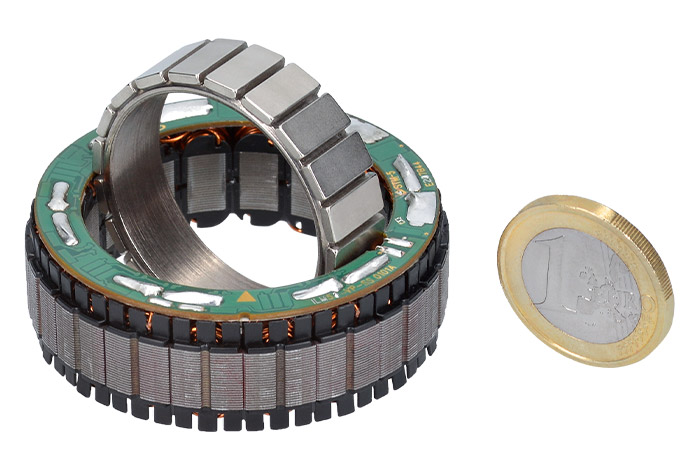
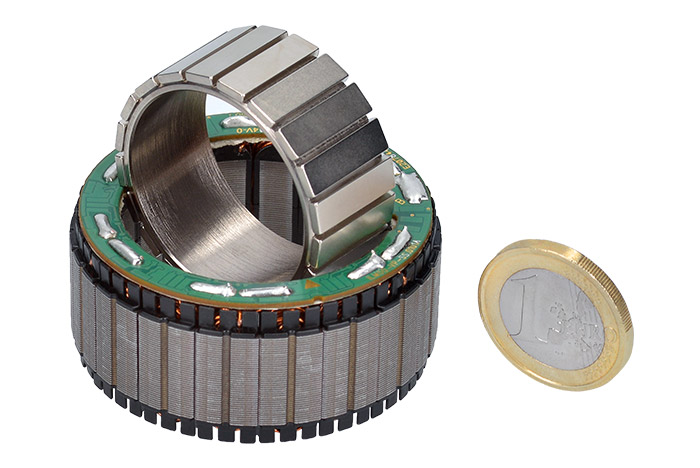
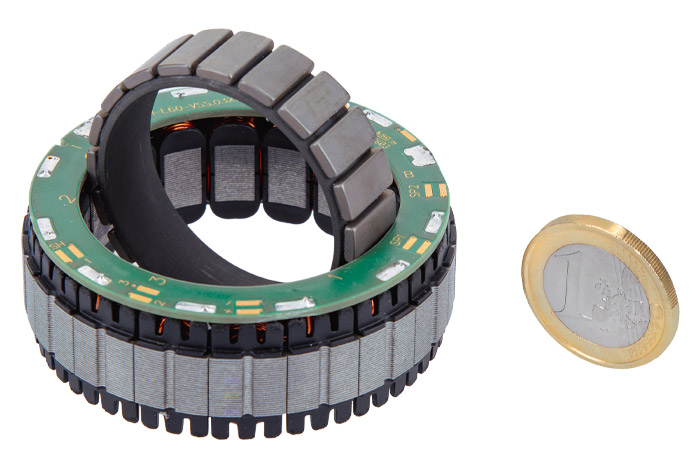
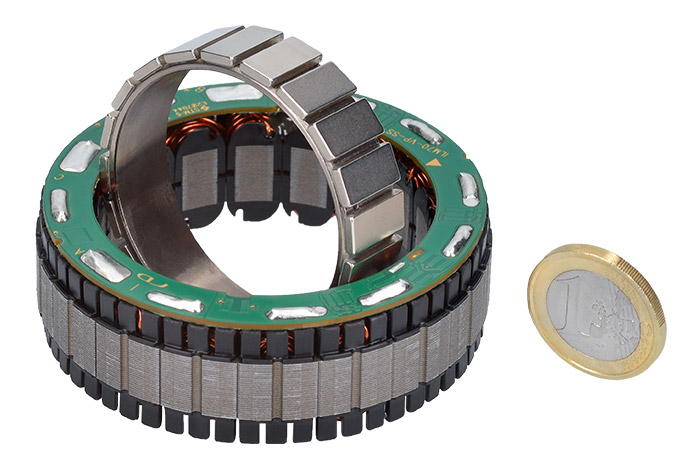
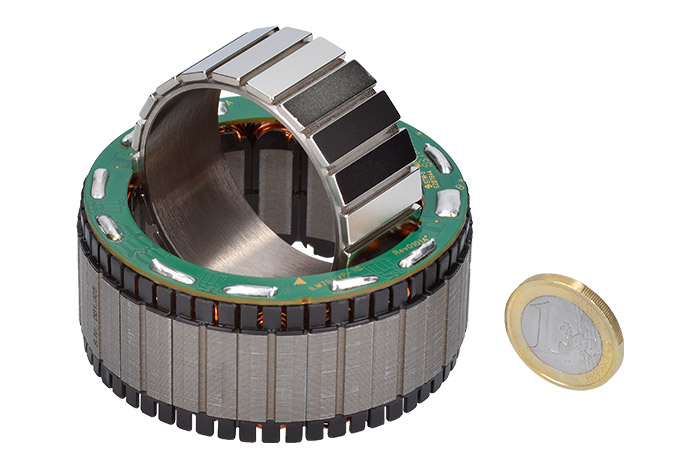
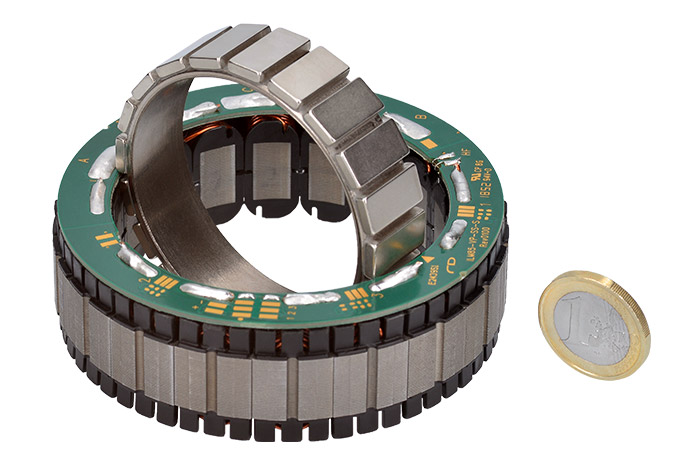
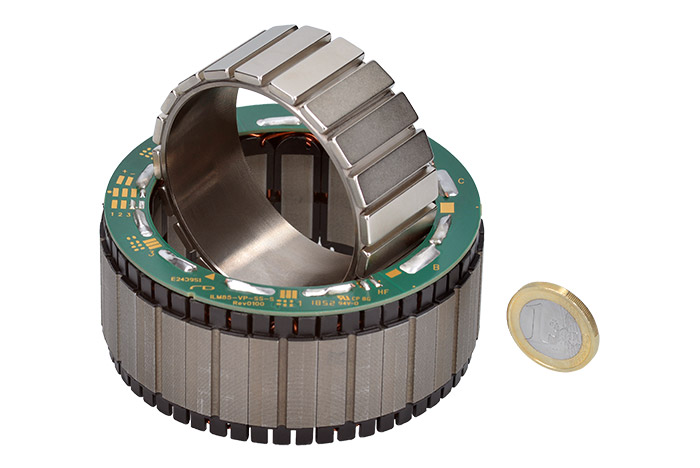
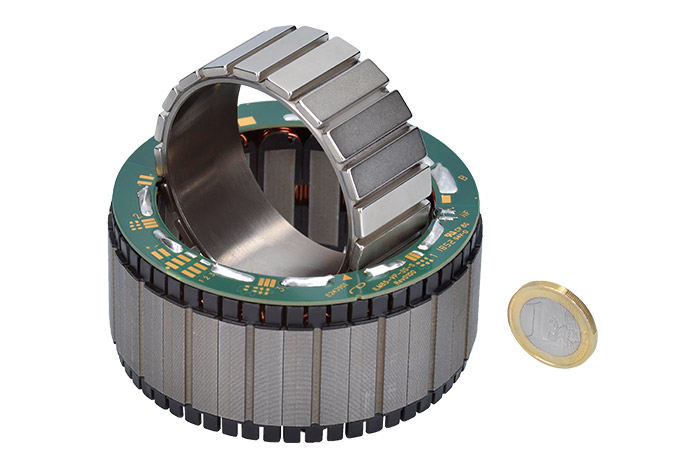
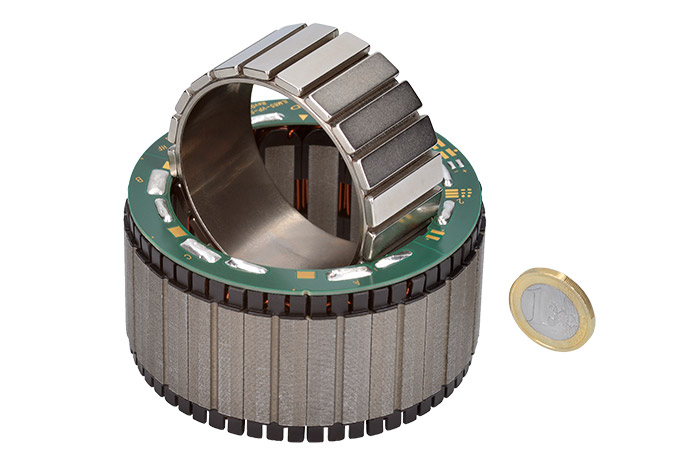
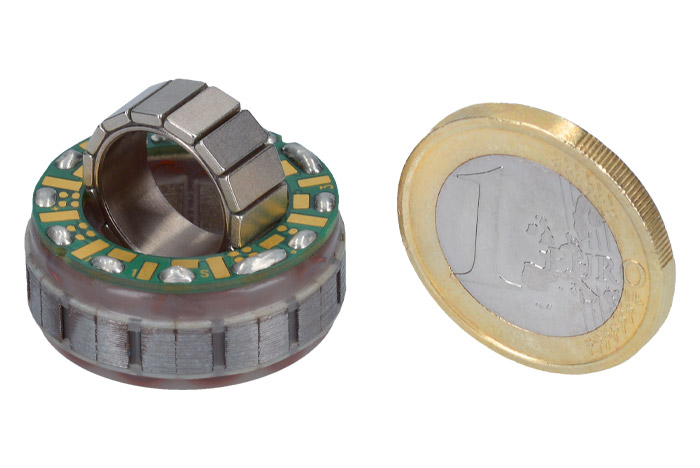
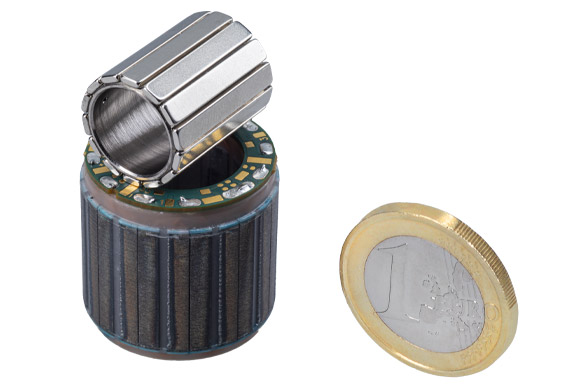
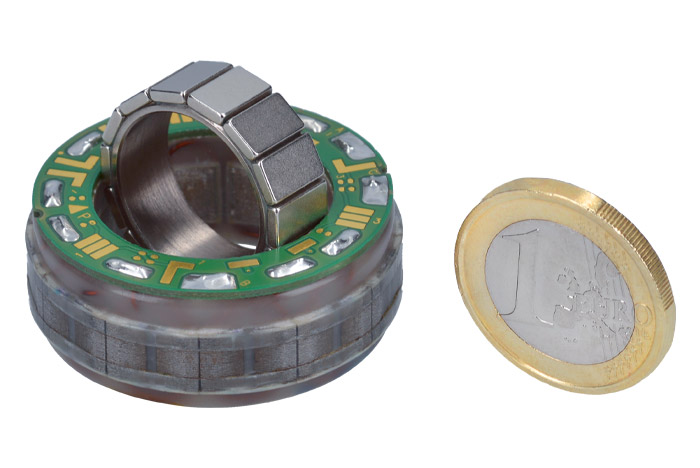
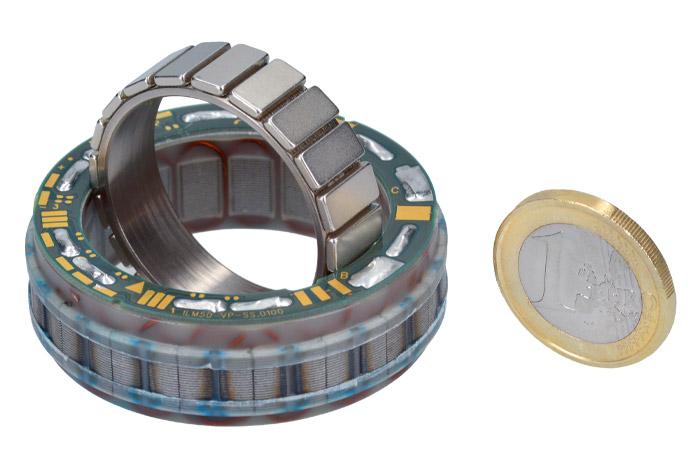
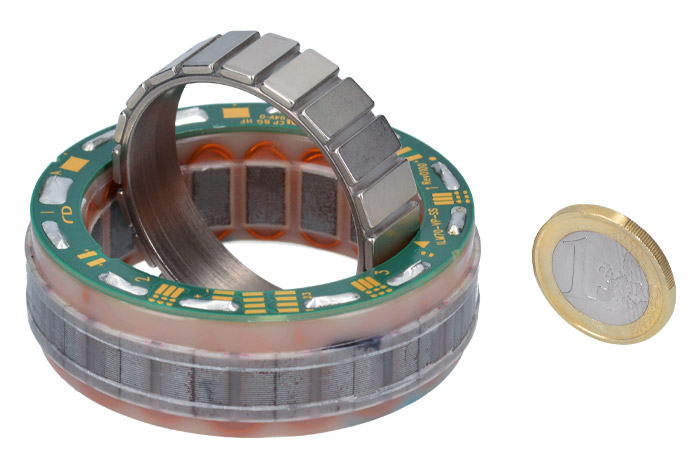
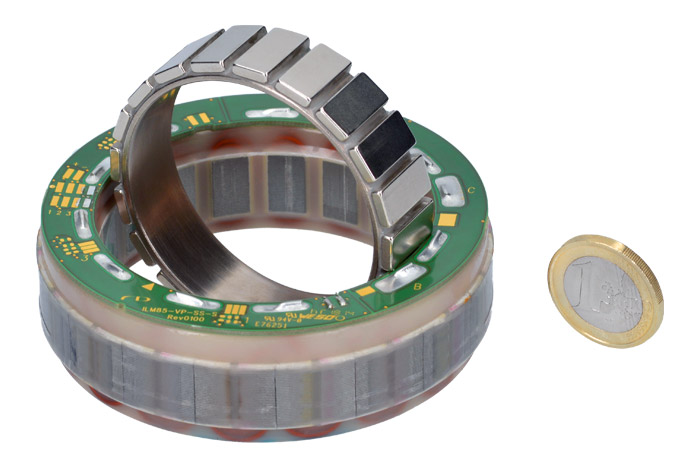
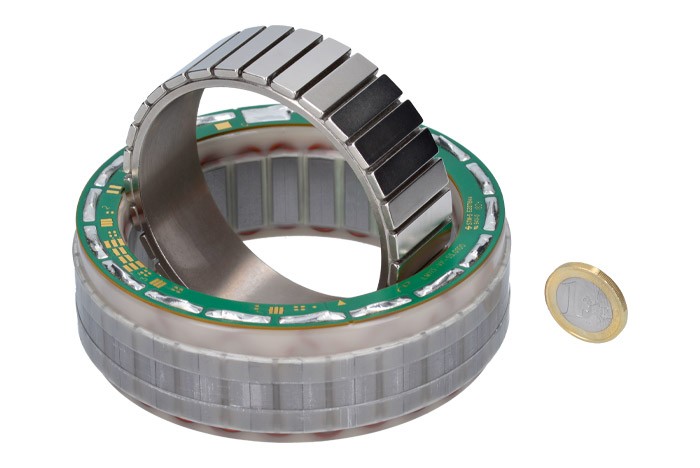
TQ-RoboDrive offers high-performance stator-rotor kits for compact, precise, and dynamic electric drives. The motor kits consist of a wound stator and a permanent-magnet rotor, which are directly integrated into the customer’s mechanical system.

For a wide range of technical and economic requirements, the ILM and ILM-E series are available. Different diameters, lengths, and winding configurations enable targeted matching to torque, speed, supply voltage, installation space, and load profile. If required, we support our customers beyond the individual motor kit all the way to the assembled actuator and system integration.

Stator and rotor as active components of the motor kit

A stator-rotor kit includes the electromagnetically active components of an electric motor. Unlike a fully assembled servo motor, it usually does not have its own motor housing, a complete shaft, or its own bearings.

These functions are provided by the customer’s design. As a result, the motor kit becomes an integral part of an axis, a robot joint, an actuator, or a machine structure. Bearings, sensors, controllers, thermal connection, and, if necessary, a gearbox are added to suit the application.

The stator-rotor principle in electric drive technology

The ILM and ILM-E motor kits belong to the category of permanent-magnet synchronous motor, or PMSM for short. 

The stator-rotor principle can be summarized in six steps:

  1. The servo controller supplies the stator windings with regulated current.
  2. A rotating electromagnetic field is generated in the stator.
  3. The rotor's permanent magnetic field follows this rotating field.
  4. The interaction of the magnetic fields generates torque.
  5. The torque sets the rotor and the connected shaft in motion.
  6. Sensors and control systems regulate current, torque, speed, and position depending on the application.

Stator and rotor do not come into contact. A defined air gap lies between them. Its geometric precision influences, among other things, synchronism, torque generation, and operational reliability.

Only together with bearings, shaft, sensors, controller, mechanical mounting, and thermal connection does the stator-rotor kit become a complete drive system. For control, the TQ motor kits require an inverter that supports sinusoidal commutation or field-oriented control (FOC), also known as vector control.

Two motor series for different requirements

TQ-RoboDrive offers stator-rotor kits in two product series. The ILM series is our premium solution for technically particularly demanding applications. The ILM-E series was developed as a cost-optimized and scalable alternative.

The choice of series is based not solely on the required torque. Precision, smooth running, sensor technology, installation concept, available size, quantity, and economic requirements must also be taken into account.

ILM series: maximum technical performance

The ILM series is designed to meet high requirements for torque density, precision, smooth running, dynamics, and customized motor design. The portfolio ranges from very small motor kits with a 25-millimeter stator diameter to high-performance sizes with 115 millimeters.

The stator is potted with epoxy resin and bonded into the customer’s housing. Hall and temperature sensors can be added as options.


ILM-E series: scalable and cost-optimized performance

The ILM-E series is the cost-optimized alternative for scalable applications and higher production volumes. A higher degree of automation in manufacturing supports reproducible series production at an attractive price-performance ratio.

The motor kits combine high torque density with low weight and a compact design. Hall and temperature sensors are integrated as standard. The ILM-E stator features open, bonded copper windings and is shrink-fitted into the customer’s housing.


ILM and ILM-E at a glance

Criterion ILM Series ILM-E Series
Positioning Premium series for particularly demanding applications Cost-optimized series for scalable applications
Stator Potted with epoxy resin Open, bonded copper windings
Stator integration Bonded into the housing Shrink-fitted into the housing
Rotor integration Bonded onto the shaft Bonded onto the shaft
Sensor technology Hall and temperature sensors optional Hall and temperature sensors integrated as standard
Sizes Broad portfolio, including very small and large diameters Focused portfolio for scalable applications
Typical orientation Highest technical requirements and custom projects Series projects and higher quantities

Product overview of stator-rotor kits

Products
×

Servo-Kits ILM-E50x08

215 W | 0.32 Nm | 6422 rpm | 48 V

 
×

Servo-Kits ILM-E50x14

209 W | 0.53 Nm | 3768 rpm | 48 V

 
×

Servo-Kits ILM-E60x09

232 W | 0.55 Nm | 4042 rpm | 48 V

 
×

Servo-Kits ILM-E70x10

231 W | 0.62 Nm | 3556 rpm | 48 V

 
×

Servo-Kits ILM-E70x18

251 W | 1.2 Nm | 1992 rpm | 48 V

 
×

Servo-Kits ILM-E85x13

404 W | 1.37 Nm | 2811 rpm | 48 V

 
×

Servo-Kits ILM-E85x23

433 W | 2.58 Nm | 1606 rpm | 48 V

 
×

Servo-Kits ILM-E85x26

436 W | 2.84 Nm | 1464 rpm | 48 V

 
×

Servo-Kits ILM-E85x30

444 W | 3.3 Nm | 1286 rpm | 48 V

 
×

Servo-Kits ILM25x04

77 W | 0.033 Nm | 22378 rpm | 24 V

 
×

Servo-Kits ILM25x08

89 W | 0.063 Nm | 13492 rpm | 24 V

 
×

Servo-Kits ILM25x18

95.7 W | 0.145 Nm | 6288 rpm | 24 V

 
×

Servo kits ILM38x06

110 W | 0.099 Nm | 10575 rpm | 24 V

 
×

Servo-Kits ILM38x12

248 W | 0.23 Nm | 10190 rpm | 48 V

 
×

Servo kits ILM50x08

209 W | 0.3 Nm | 6710 rpm | 48 V

 
×

Servo kits ILM50x14

219 W | 0.54 Nm | 3849 rpm | 48 V

 
×

Servo kits ILM70x10

250 W | 0.66 Nm | 3650 rpm | 48 V

 
×

Servo kits ILM70x18

277 W | 1.25 Nm | 2110 rpm | 48 V

 
×

Servo kits ILM85x04

284 W | 0.30 Nm | 7900 rpm | 48 V

 
×

Servo kits ILM85x13

443 W | 1.44 Nm | 2938 rpm | 48 V

 
×

Servo kits ILM85x23

465 W | 2.57 Nm | 1728 rpm | 48 V

 
×

Servo kits ILM85x26

470 W | 2.9 Nm | 1560 rpm | 48 V

 
×

Servo-Kits ILM115x25

570 W | 3.9 Nm | 1400 rpm | 48 V


Show more

No entries were found for your selection.
Please select another combination.

Motor kits as part of our products and drive solutions

Motor kits form the first pillar of our offering. They are designed for customers who want to integrate the stator and rotor themselves into their own shaft, machine, or actuator architecture.
The overarching page “Motors & Drive Solutions” presents the full range of services offered by TQ-RoboDrive. In addition to the ILM and ILM-E motor series, this includes customer-specific actuators as well as further assembly and integration services.

Discover Motors & Drive Solutions

Five TQ-RoboDrive motors of different sizes
One hand holds a drive solution, and next to it is a motor integrated into a robotic joint with built-in electronics

From the motor kit to the custom actuator

Not every company wants to fully assemble stator, rotor, bearings, gearbox, sensors, and housing itself. That is why, with our Assembly & Integration Service, we also support customers beyond the individual motor kit.
Depending on the project, we can combine the motor, gearbox, mechanical components, sensors, electronics, and thermal interface into a customer-specific actuator. In addition, we support the integration of the unit into the customer´s system.

Discover Actuators & System Integration

The right motor kit for your application

Our Application Engineering team supports you in selecting the right stator-rotor kit—from motor series, frame size, and winding to gearbox, sensors, and mechanical and thermal integration. In doing so, we take technical requirements into account as well as volume, integration effort, and cost-effectiveness.

Request a free Design Check!


FAQs on stator-rotor kits

What is a stator-rotor kit?

A stator-rotor kit consists of the stationary stator and the rotating rotor of an electric motor. Both components form the electromagnetically active part of the motor and are directly integrated into the customer’s design. Housing, shaft, bearings, sensors, and, if applicable, a gearbox are added separately.

What is the difference between stator and rotor?

The stator is the stationary part and the rotor is the moving part of the motor. In the stator, energized copper windings generate a rotating electromagnetic field. The permanent-magnet rotor follows this field and transfers the resulting torque to the shaft. Between the stator and rotor there is a defined air gap, so that the two components do not mechanically touch during operation.

How does a stator-rotor motor work?

A stator-rotor motor operates through the interaction of two magnetic fields. The controller supplies the stator windings with regulated current, thereby generating a rotating field. The magnetic field of the permanent-magnet rotor aligns itself with this field. This creates a torque that moves the rotor. Sensors and control systems regulate position, speed, or torque depending on the application.

What distinguishes a motor kit from a complete servomotor?

A motor kit mainly contains the stator and rotor, whereas a complete servo motor usually already includes the housing, shaft, bearings, and other components. The stator-rotor kit is integrated directly into the existing mechanical structure. This allows engineers to tailor installation space, hollow shaft, bearings, sensing, and heat dissipation precisely to their application.

What is the difference between the ILM and ILM-E series?

The ILM series is the premium solution for especially high technical requirements and features a potted stator. The ILM-E series is a cost-optimized and scalable alternative with an unpotted stator as well as integrated Hall and temperature sensors as standard. Which series is suitable for a given application depends, among other factors, on torque, precision, frame size, sensors, integration concept, volume, and cost-effectiveness.

-1