ILM25x04
77 W | 0.033 Nm | 22378 rpm | 24 V
The ILM series is TQ-RoboDrive's premium motor series. Its stator-rotor kits combine high torque density with precise smooth running, high dynamics, and a thermally optimized design. This makes them particularly suitable for applications where performance, precision, and reliability must come together in a compact installation space. The series has been continuously developed since 2005 and is now available in various diameters, axial lengths, and winding configurations.
The principle behind the ILM series
The abbreviation ILM stands for inner-rotor motor. In this motor design, the moving rotor is located inside the stationary stator.
The windings in the stator generate an electromagnetic rotating field that interacts with the permanent-magnets of the rotor and sets it in motion. Due to the comparatively small rotor diameter, an inner-rotor motor has low moment of inertia. This enables rapid changes in speed and direction as well as precise control.


Cast stator as a visible distinguishing feature
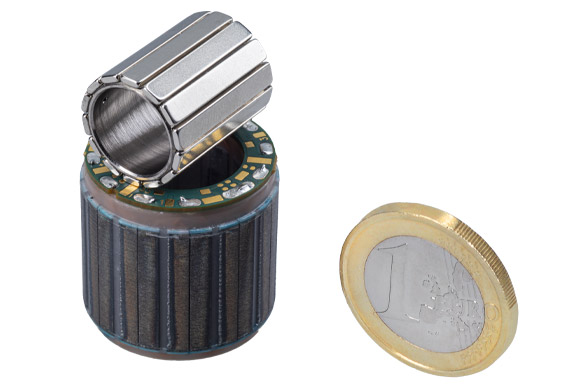
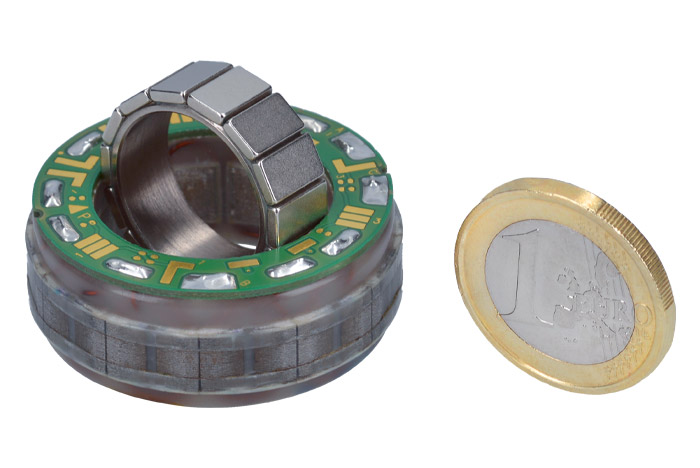
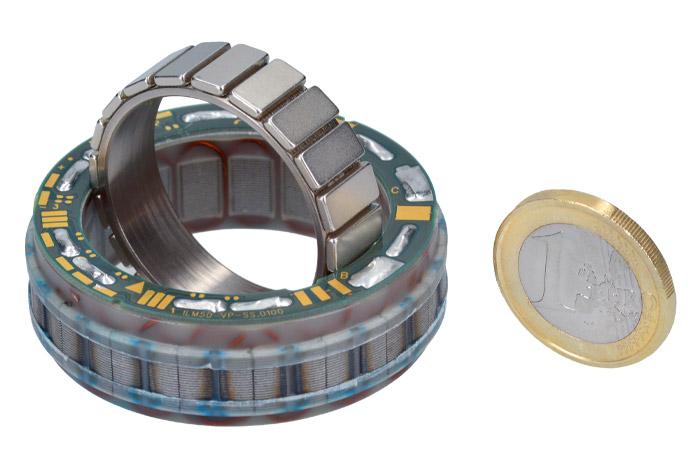
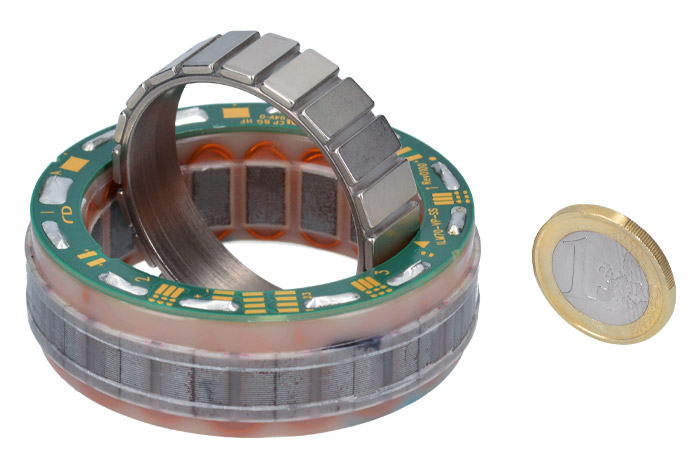
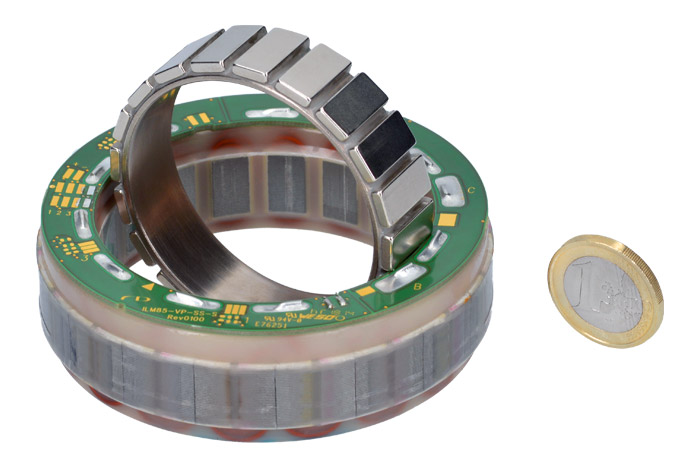
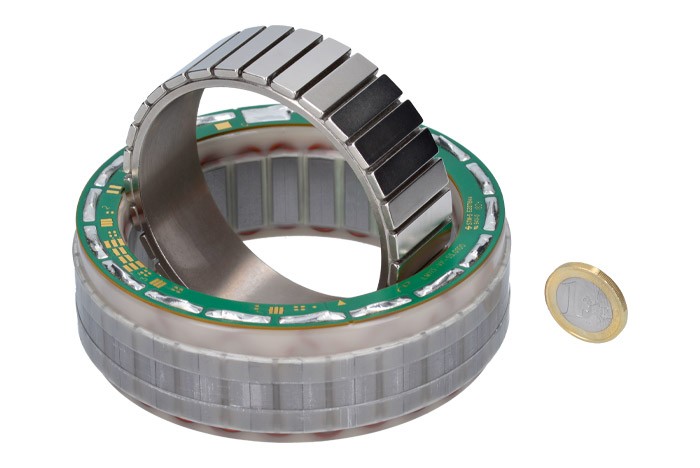
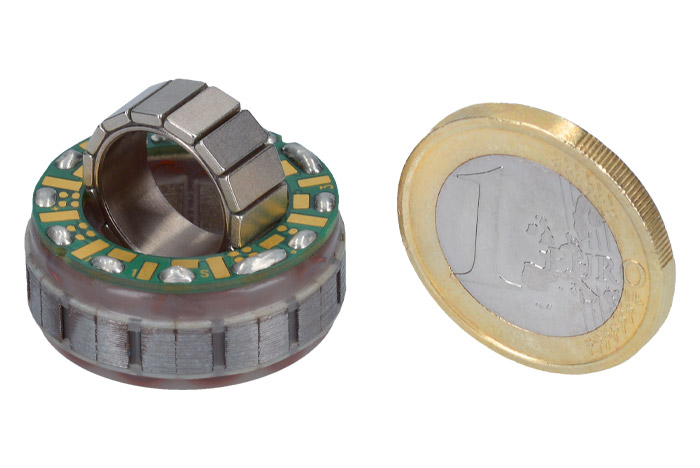
Visually, the ILM series differs from the ILM-E series primarily by its fully encapsulated stator. The windings and laminated core form a closed, robust unit that is bonded into the customer’s housing.
The encapsulation of the ILM series improves thermal coupling and supports high continuously usable torques in demanding applications.
Technical features of the ILM Series
The ILM motor kits are manufactured in a specialized production process and are designed for exceptionally high technical requirements. Concentrated windings contribute to low electrical losses and the highest torque density.

The ILM series offers:
Detailed explanations of the frameless design, torque density, and use as a direct drive or with gearbox can be found on the “Technology & Expertise” page.
Typical applications of the ILM series
The ILM series is particularly suitable for technically demanding and thermally stressed applications. Its high precision, low mass inertia, and compact design are especially advantageous in medical technology as well as in aerospace applications.
Typical areas of application include:
Further information on the requirements of each area of application can be found on the “Applications & Industries” page.

The ILM series currently includes the following motor kits. On the respective product pages, you will find technical specifications, data sheets, and CAD data for the specific design of your application.
ILM stands for inner-rotor motor (in German: Innenläufermotor). In this type of motor design, the moving rotor is located inside the stationary stator. The energized windings of the stator generate an electromagnetic rotating field that interacts with the rotor’s magnetic field and sets it in motion. The comparatively small rotor diameter supports low inertia, enabling fast and precise movement sequences.
The ILM series is TQ-RoboDrive's premium motor series for applications with high demands on torque density, precision, dynamics, and thermal resilience. Its key features include concentrated windings, a fully potted stator, and various frame sizes. Alternative voltage levels, higher speeds, and customer-specific torque adaptations can also be implemented depending on the project.
The encapsulated stator supports good thermal coupling and protects the windings as a compact unit. This allows the heat generated in the windings to be transferred in a targeted manner to the customer’s housing. This is particularly relevant in applications with high continuous or holding torques. The ILM stator is usually bonded into the designated housing during integration.
The ILM series is available with stator diameters of 25, 38, 50, 70, 85, and 115 millimeters. Within each diameter, different lengths and winding configurations are available. This allows the motor kits to be tailored to various requirements for torque, speed, supply voltage, and installation space. The specific performance data can be found in the respective product data sheets.
The ILM series is particularly suitable for applications requiring high precision, compact dimensions, low mass inertia, and good thermal coupling. Typical areas of use include medical technology, surgical robotics, medical positioning systems, high-precision robotics, measurement and laser technology, as well as aerospace. However, the specific suitability always depends on the application's load, motion, and temperature profile.